

Most crypto systems reward what they can count. Hash rate. Transaction volume. Wallet size. These are legible variables — easy to measure, easy to game.
And because they are easy to game, they attract extraction rather than contribution. Bots, farms, and speculative capital flood toward whatever the system rewards most visibly.
The result is a familiar cycle: launch, hype, dump, disappear.
InterLink was designed around a different premise. The problem was never that crypto systems lacked value.
The problem was that they could not measure the right kind.
✨ The Invisible Essence
There is a category of human behavior that traditional economic systems have always acknowledged but never quantified: alignment.
The willingness to stay when exit is possible. The consistency of participation over time. The trust embedded in repeated, deliberate engagement.
Adam Smith called labor the origin of true wealth. He warned against “unproductive” activity — effort that consumes value without generating it.
But his framework had no mechanism to distinguish the two at scale. Markets optimized for what was legible, and legibility favored speed and volume over patience and integrity.
The Human Credit System (HCS) is, in structural terms, the completion of that unfinished work.
It does not reward activity. It processes behavioral alignment — filtering participation through verification before it becomes economically real. What was previously invisible — time, trust, consistency — gets crystallized into Verified ITLG.
This is not a loyalty program.
It is a measurement infrastructure.

🔋 Potential Energy. Activated Energy.
The distinction between unverified and verified ITLG is not cosmetic.
Unverified ITLG represents intention. It exists on the ledger, but it has not been converted into economic force. It is potential energy — accumulated, waiting, unmoved.
Verified ITLG is different. Once contribution passes the HCS filter, it becomes accountable. It carries weight in the system not because it was issued, but because a real participant remained aligned long enough to earn that designation.
Markets do not reward intent.
They reward activated trust.
This distinction shapes everything downstream — including the structure of InterLink’s dual-token architecture.

⚖️ The 10:1 Problem
ITLG supply: 100 billion.
ITL supply: 10 billion.
That asymmetry is not an accident. It is a structural design decision with significant consequences.
If the transition from ITLG to ITL were simultaneous and unrestricted, the result would be predictable: liquidity shock.
Millions of participants converting in a compressed window. Market depth insufficient to absorb the demand. Price instability before utility has time to mature.
The 10:1 ratio makes this problem legible. It also makes the solution necessary.
A system with this supply structure cannot afford to open all gates at once. It needs a mechanism that sequences conversion — not to exclude participants, but to match the release of liquidity to the ecosystem’s actual absorption capacity.
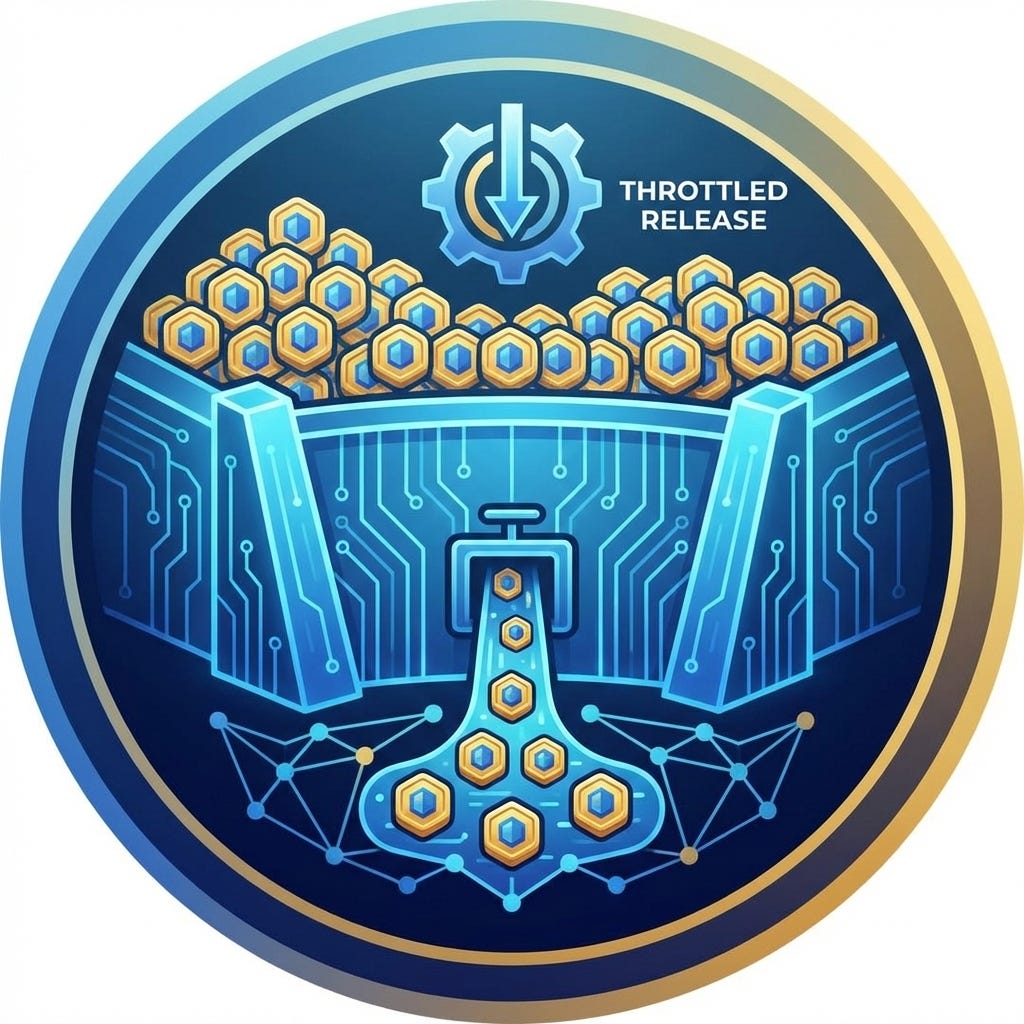
Think of it as a dam.
The reservoir may be full. But controlled release, timed to downstream capacity, is what prevents flooding.
📊 What the Dashboard Actually Measures
InterLink’s node health interface tracks three metrics: Daily Mining Rate, Group Mining Rate, and Burn Cycle.
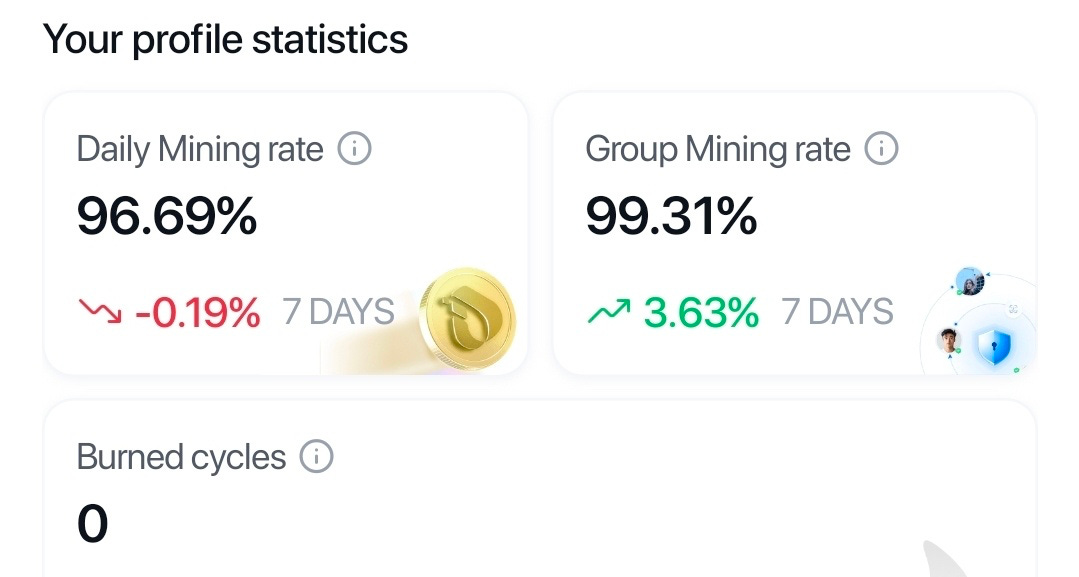
At first glance, this looks like an activity summary. It is not.
Daily Mining Rate tracks individual participation continuity. Group Mining Rate signals that network integrity carries weight alongside personal output — that readiness is partially relational, not purely individual. Burn Cycle measures the inverse: inconsistency, inactivity, gaps in engagement.
Zero burn implies continuity — and continuity makes liquidity predictable. Burn cycle is not purely punitive — the metric exists because recovery is possible, and the system was designed to measure where a participant stands now, not where they fell behind.
Each metric feeds into a qualification logic that determines not whether a participant can convert — but when, and in what sequence.
This is not decorative UI.
The evaluation axis has shifted from:
“How much did you accumulate?”
to:
“How stable is your participation over time?”
That shift is not a UX decision.
It is a supply management philosophy.
🛣️ Two Paths. One Fork.
Once ITLG is verified, the participant faces a structural choice.
The first path leads to ITL — the system’s liquid layer. Payments, commerce, real-world utility. Liquidity that represents structural value rather than speculative pressure, because the contribution behind it was verified before it arrived.
The second path is staking.
Keeping Verified ITLG committed to the network — not because exit is impossible, but because the participant chooses to delay it.
The system grants priority access and proportional distribution to those who remain aligned when extraction is available but deferred. This is not yield for locking capital. It is yield for staying when leaving was an option.
The fork itself is the architecture.
Both paths are legitimate — ITL conversion enables real participation in commerce and the token economy, while staking extends the contributor’s weight within the network.
What the system separates is not good actors from bad ones. It separates verified contribution from unverified pressure.

🖐️ The Algorithmic Hand
Smith’s Invisible Hand optimizes price signals across a market.
It is reactive, emergent, and indifferent to the difference between productive and extractive behavior.
InterLink’s verification layer functions differently. It is active, structural, and designed specifically to distinguish between the two.
Call it an Algorithmic Hand — one that filters participation before it becomes liquidity, rather than correcting for extraction after the damage is done.
The strength of ITL is not derived from its issuance. It is derived from the fact that the ITLG behind it was held by real participants who remained aligned over time.
Verified contribution. Sequenced release. Controlled conversion.
This is not a race to liquidity.
It is a system that determines when liquidity deserves to exist.
If you’d like to support my research, you may use my Interlink invitation code below. It also unlocks an instant mining boost ✚︎ Welcome Bonus for new users.
InterLink Referral Code: 905079415
Wallet Invitation Code : HSVZZPEJ (75% Commission Rebate)
❓ New to InterLink?
For a 🔗step-by-step guide, start with the pinned post at the top of my blog — Done.T Insight✨.
You don’t need capital. You just need five minutes.
📚 Done.T’s Related Insights
Why You Don't Need to Be a Crypto Expert to Participate in Tokenization

We are moving toward a world where real economic activity runs on blockchain infrastructure.
Why Crypto's Definition of Alpha Is Quietly Changing

There is a rule that has governed crypto markets for the better part of a decade.
🔎 Search “Done.T Insight” on Google for real data & analysis.
Disclosure: This post contains referral links and reflects my personal research and experience. It is provided for informational purposes only and does not constitute financial advice.