

Most people think paying with crypto means spending a token.
Swipe, confirm, done. The balance drops. The merchant gets paid. End of story.
I thought the same thing — until I used the InterLink Visa Card for the first time and started asking a question that turned out to be much harder than it looked.
Where did that payment actually go?
Not in the blockchain sense. Not “which wallet received it.”
I mean structurally. Economically. Who earned what, from what, and why does any of it matter beyond the convenience of not carrying a separate card?
That question led me somewhere most crypto payment narratives never bother to go.
The Card Is Not the Story
Let’s start with what InterLink is not.
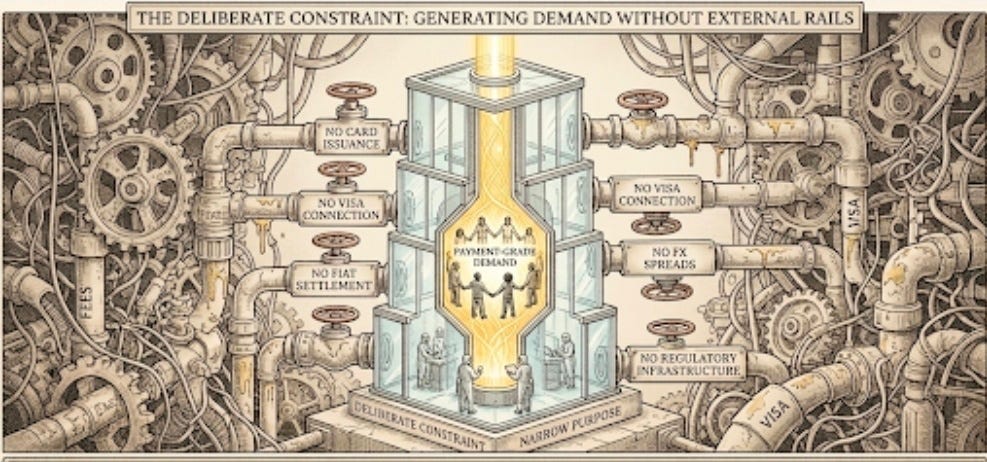
InterLink does not issue cards. It does not connect directly to Visa. It does not process fiat settlements, manage FX spreads, or operate compliance infrastructure at the payment layer.
For most Web3 projects, that list of absences would be a liability — a sign that the “real product” hasn’t been built yet.
Here, it is the opposite. It is a deliberate architectural constraint, and understanding why that constraint exists is the only way to understand what this system is actually doing.
InterLink was never designed to be a revenue-extracting payment company. It was designed to be something narrower — and far more difficult to replicate: a human-verified network that generates payment-grade demand without owning the payment rails.
That means no token sales to fund operations. No protocol-level fee extraction. No need to monetize users directly.
Which raises the obvious question: if InterLink isn’t earning money from payments, who is?
HPX Is the Revenue Layer
This is where HPX enters — and where the architecture starts to make sense.
HPX is not a branding partner or a technical add-on. It is the enterprise-grade financial gateway sitting behind every InterLink Visa Card transaction. HPX already operates cards, wallets, and settlement systems at scale. When a user taps to pay, HPX is the entity processing what happens next.
All real cash flows generated by the InterLink Visa Card occur at the HPX layer:
interchange fees from every transaction, FX margins on cross-currency settlements, processing and infrastructure usage revenues that scale with volume.
InterLink provides the verified users.
HPX provides the rails.
One without the other is incomplete. Together, they form a system built on a principle that most payment infrastructure ignores: usage precedes monetization.
The revenue this infrastructure generates is not token-based speculation. It is grounded in interchange economics and settlement volumes — infrastructure-based expectations that function independently of market sentiment.
And by stated design, that revenue is intended to flow back to the network. Not to a team. Not to early investors. To the participants who generated it through verified, sustained use.
What My Payment Actually Did
My first real transaction with the InterLink Visa Card was unremarkable on the surface.
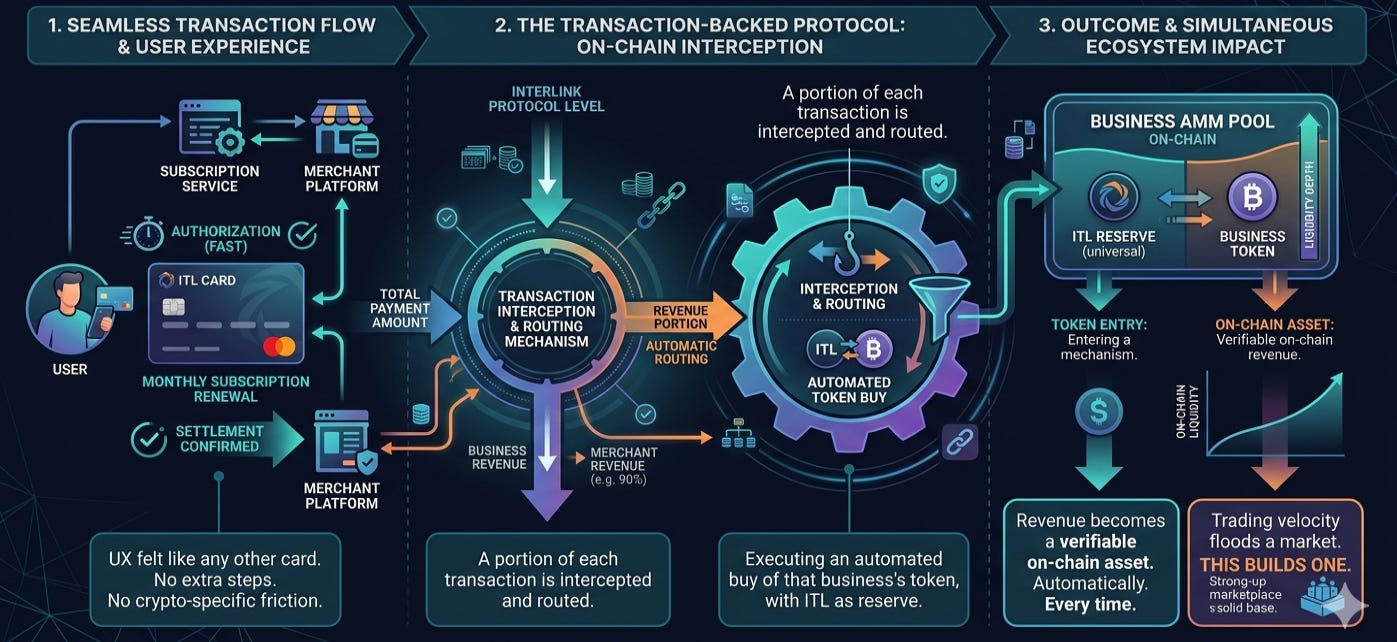
A subscription renewal on a platform I use monthly. The authorization cleared faster than I expected — noticeably faster than some traditional card transactions I’ve run on the same service. Settlement confirmed without a second prompt. The UX felt like any other card. No extra steps, no crypto-specific friction, no moment where it felt like an experiment.
That seamlessness was the first signal that something had been built properly.
But the more interesting question wasn’t the speed. It was what the ITL I spent actually did next. Most payment networks process a transaction and stop there. Money moves, the record is logged, nothing else happens.
InterLink works differently at the protocol level.
Every payment processed through the system automatically triggers the Transaction-Backed Protocol. A portion of each transaction is intercepted and routed into the business’s AMM pool on-chain — executing an automated buy of that business’s token, with ITL as the universal reserve. The payment completes. And simultaneously, on-chain liquidity deepens.
The token didn’t exit as a market sell. It entered a mechanism.
Revenue becomes a verifiable on-chain asset. Automatically. Every time.
Trading velocity floods a market.
This builds one.
Why the Structure Matters More Than the Feature
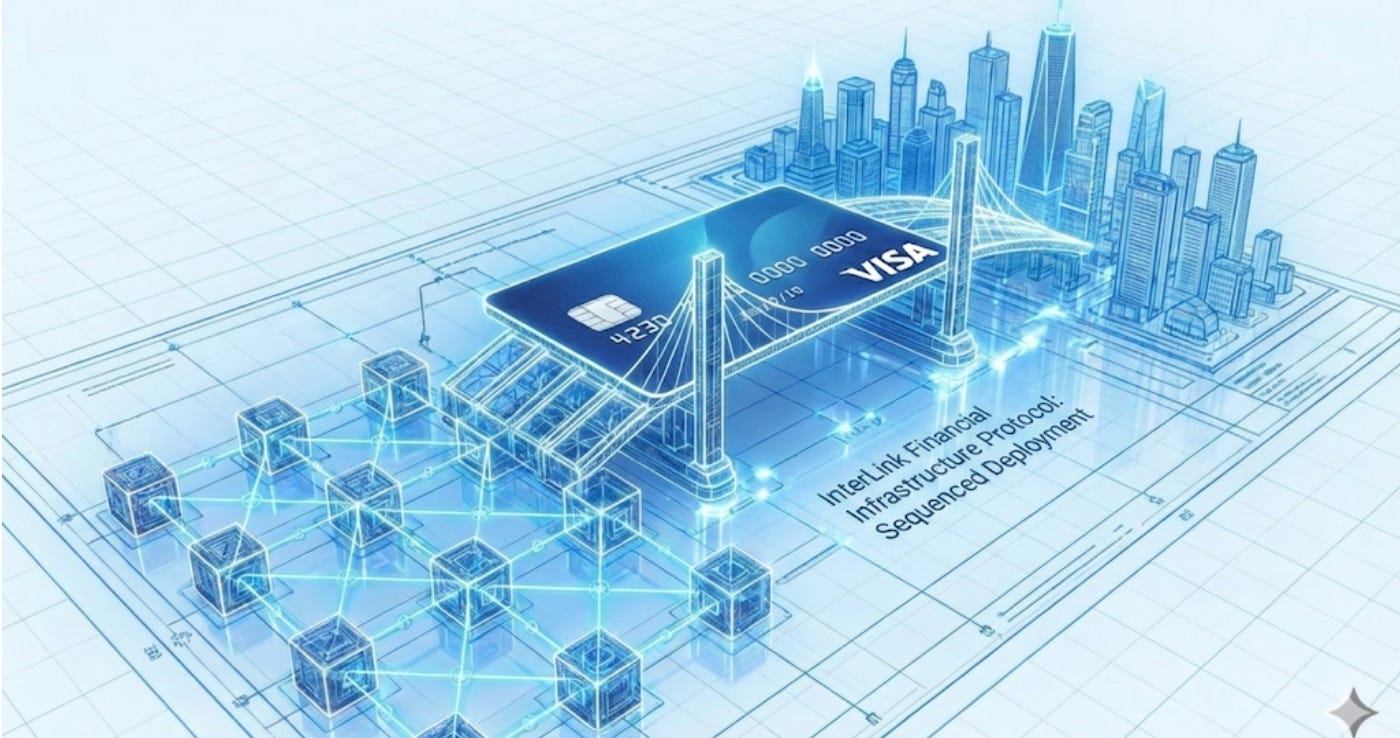
The InterLink Visa Card is being positioned as a milestone — and it is. Ten thousand cards distributed monthly, not as a marketing stunt, but as controlled real-world deployment.
A declaration that InterLink is exiting the experimental sandbox and entering the layer where crypto either proves itself or doesn’t.
But the card is not the point. The point is what the card reveals about the architecture beneath it.
A revenue layer that earns without extracting. A token that circulates without being dumped. A protocol that redistributes value rather than capturing it — because by design, it was never built to be the one holding the money.
The tap was simple.
What it took to make that tap possible was not.
That gap — between what the user experiences and what the architecture is doing — is exactly where InterLink has been working.
Most people will notice the card.
The ones paying attention will notice what the card proves.
If you’d like to support my research, you may use my Interlink invitation code below. It also unlocks an instant mining boost ✚︎ Welcome Bonus for new users.
InterLink Referral Code: 905079415
Wallet Invitation Code : HSVZZPEJ (75% Commission Rebate)
❓ New to InterLink?
For a 🔗step-by-step guide, start with the pinned post at the top of my blog — Done.T Insight✨.
You don’t need capital. You just need five minutes.
📚 Done.T’s Related Insights
One Year In, InterLink Added KYC. Stop Asking What. Start Asking Why.

When InterLink launched, the headline feature was face verification. A real human, not a bot. That was the promise.
Zero-Capital Tokenization: How InterLink Creates Value Without Investment

Tokenization is one of those words that sounds important but rarely gets explained.
🔎 Search “Done.T Insight” on Google for real data & analysis.
Disclosure: This post contains referral links and reflects my personal research and experience. It is provided for informational purposes only and does not constitute financial advice.