

Something significant always happens before a major liquidity event. Systems reorganize quietly, through structural shifts rather than spectacle.
In the decentralized world, liquidity defines price, but order defines access.
To the casual observer, the current Recovery phase is just a feature update — a way to get back what was lost. To the architect, however, it is a sequencing mechanism.
It is a deliberate calibration designed to separate the signal from the noise before the gates of Version 5.0 (V5.0) swing shut.
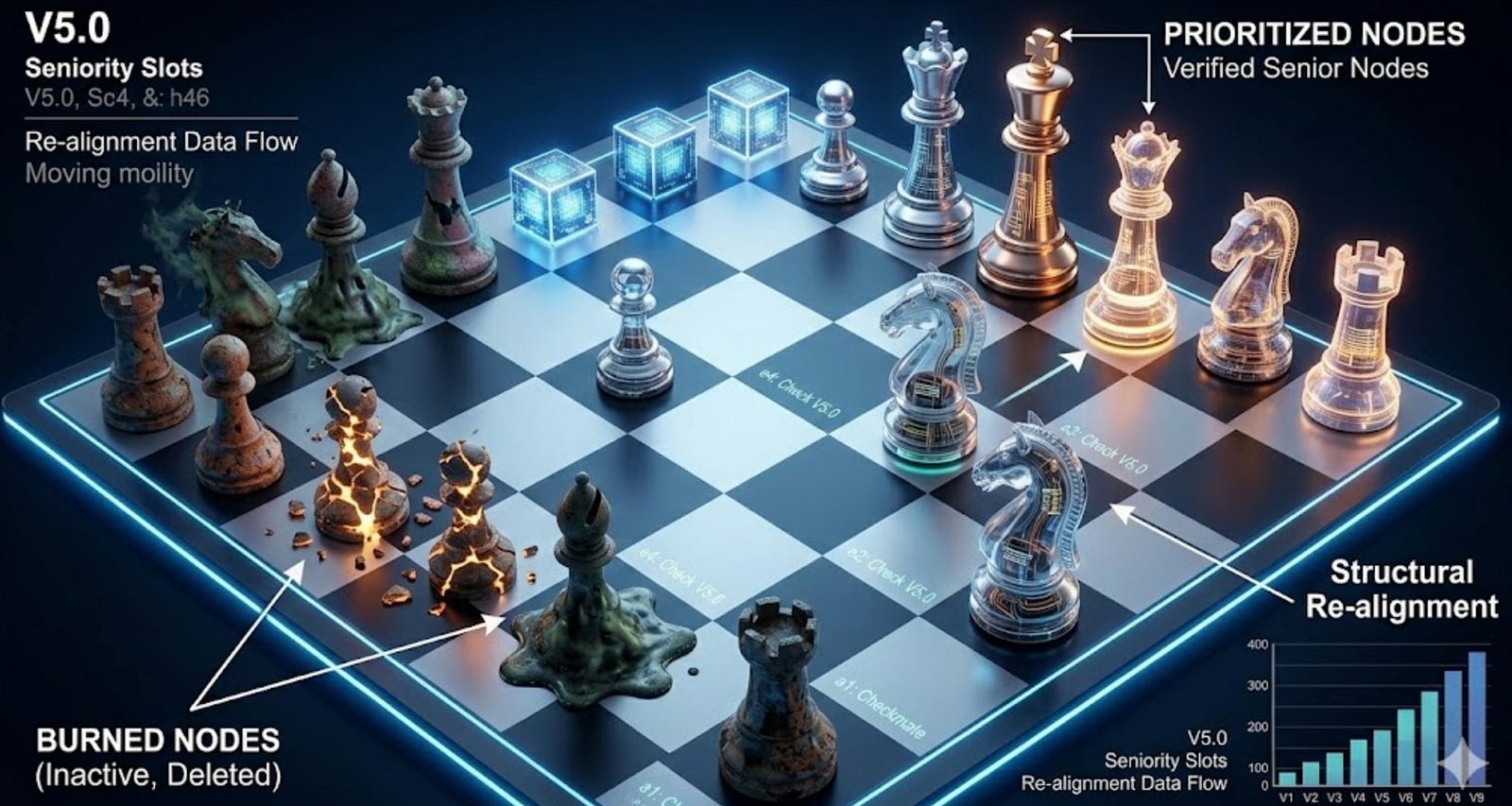
🔥 The Necessity of Contraction: The Burn as a Filter
Before you can have Recovery, you must have the Burn.
In the early stages of any network, expansion is everything. But expansion without discipline leads to fragility.
The recent Burn was never just a narrative tool; it was a ruthless filter.
By removing inactive nodes and dormant accounts from the reward flow, the protocol stopped optimizing for raw quantity and started optimizing for integrity.
When a system willingly reduces its own accessible output, it signals a shift in maturity.
It is no longer seeking growth at any cost — it is seeking verified data. In the InterLink ecosystem, data is the only valid precursor to qualification.
The Burn proved who was watching;
Recovery will prove who is acting.
⚖️ Recovery is Not Expansion: The Logic of Alignment
Most market participants misinterpret Recovery. They interpret “restoration” as supply relief — an inflationary misread.
Recovery is inherently conditional. Eligibility must be verified before restoration occurs.
This means Recovery does not reverse the Burn; it reorganizes the survivors of the Burn.
It is a process of alignment under review.
By requiring users to re-engage and check their status, the protocol is recording a new layer of behavioral data. It is distinguishing between the “holder” and the “active node.”
This phase ensures that the tokens being restored are placed in the hands of those who are statistically likely to support the network’s next leap.
⏳ The V5.0 Pressure Adjustment: Timing is the Message
In protocol design, timing is the ultimate message. Version 5.0 is not cosmetic — it hardens the system’s internal logic.
As we approach V5.0, the environment will shift from “open participation” to “competitive qualification.” We can expect several key changes:
Verification Scarcity:
Access to high-tier node status will become a limited resource.Slot Competition:
Priority will no longer be given to the first person in line, but to the most consistent.Metric-Driven Rewards:
Network health will outweigh sheer mining volume.
Before the system hardens, it “softens” once.
This window of Recovery is a calibration phase. It allows the network to synchronize its core participants before the sequencing becomes strict.
This isn’t an act of generosity; it is pre-emptive synchronization.
🔄 Moving Beyond Early-Phase Logic: The Continuity Pivot
Early-stage networks are obsessed with quantity: more mining, more users, more distribution.
But every successful network hits a threshold where the governing question changes.
It is no longer: “How much was produced?”
It becomes: “How consistently was value contributed?”
Recovery marks this exact pivot.
It separates raw output from behavioral continuity. If you were inactive, you were burned. If you are eligible, you recover.
This cycle creates a measurable history of alignment that is more valuable than any static balance. In the liquidity phase, continuity will be the only asset that provides a strategic advantage.
🏗️ The Hidden Architecture of Success
Observe the sequence carefully:
Burn → Activity Measurement → Conditional Recovery → Qualification Reinforcement.
This is not a random iteration of code.
It is architectural sequencing.
Protocols that intend to dominate liquidity markets must master two elements: supply discipline and access order.
Recovery is how the system defines that order. When qualification tightens in V5.0, the system will already have a record of who is aligned and who is just a spectator.
That alignment is being recorded in real time.
Those who act during the Recovery phase are effectively locking in their “seniority” before the competitive pressure of V5.0 begins.
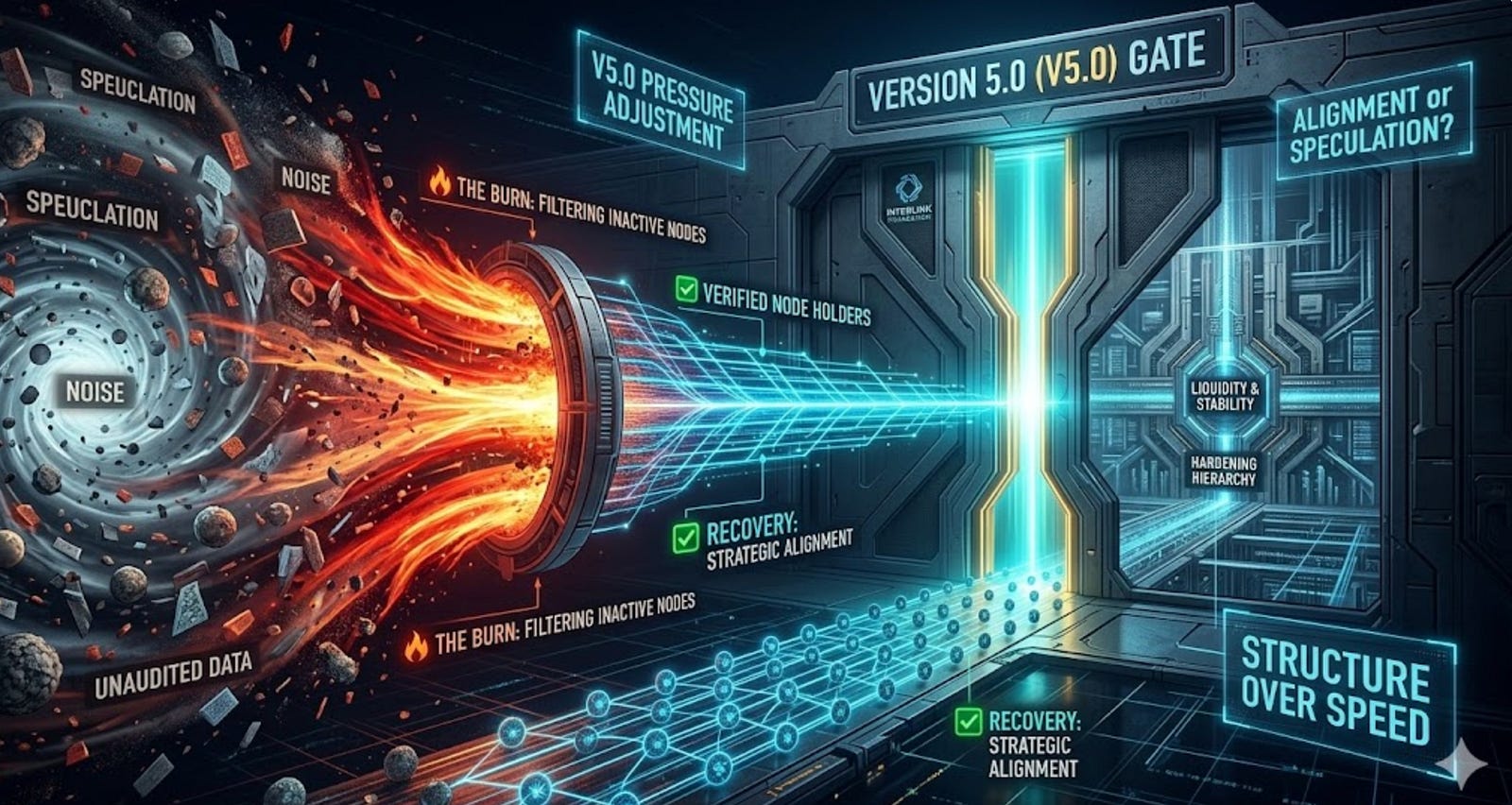
🔒 The Final Position Lock: Why Early Action Matters
Recovery is the sorting layer.
Systems do not undergo this level of reorganization unless a significant pressure event is imminent. And make no mistake — liquidity is the ultimate pressure event.
If V5.0 introduces a stricter reality, then Recovery is the final opportunity to align under flexible conditions.
Once the transition is complete, verification priority will become the new currency. Those who waited will find themselves at the back of a very long, very competitive line.
🏁 Conclusion
Before a system reclassifies its users, it reorganizes its structure. Before it offers liquidity, it enforces a sequence.
Recovery isn’t about getting tokens back; it’s about restoring your strategic position in a hardening hierarchy.
When the gates of V5.0 close, only the aligned move forward with efficiency. Everything else is just inventory.
When qualification hardens, participation is no longer equal.
Liquidity does not reward presence.
It rewards recorded alignment.
If you’d like to support my research, you may use my Interlink invitation code below. It also unlocks an instant mining boost ✚︎ Welcome Bonus for new users.
InterLink Referral Code: 905079415
Wallet Invitation Code : HSVZZPEJ (75% Commission Rebate)
❓ New to InterLink?
For a 🔗step-by-step guide, start with the pinned post at the top of my blog — Done.T Insight✨.
You don’t need capital. You just need five minutes.
📚 Done.T’s Related Insights
Layer 1 Is Not a Tech Choice. It's a Trust Choice.

Blockchain has always been a story about trust. The question has never been whether a network can process transactions — the question is what the network ultimately trusts, and why.
From Invisible to Measurable: The Economic Architecture Behind InterLink's Human Credit System

Most crypto systems reward what they can count. Hash rate. Transaction volume. Wallet size. These are legible variables — easy to measure, easy to game.
🔎 Search “Done.T Insight” on Google for real data & analysis.
Disclosure: This post contains referral links and reflects my personal research and experience. It is provided for informational purposes only and does not constitute financial advice.