

When InterLink’s DAO opened voting on the vITLG to ITL conversion ratio, the community’s attention went to the numbers. 160:1 or 1.125:1. Thirty-six months or sixty months. How much do I get, and how long do I wait.
That framing missed the point entirely.
Option 2 — Balanced Growth was not selected because it offered the best personal return. It was selected because it offers the most structurally sound foundation for what comes next. The DAO did not vote on a staking ratio. It voted on how fast ITL enters circulation, how deep the scarcity runs, and how much room the ecosystem has to absorb genuine commercial demand before supply pressure arrives.
That is not a personal finance decision. That is an economic architecture decision.

Clear the Misconception First
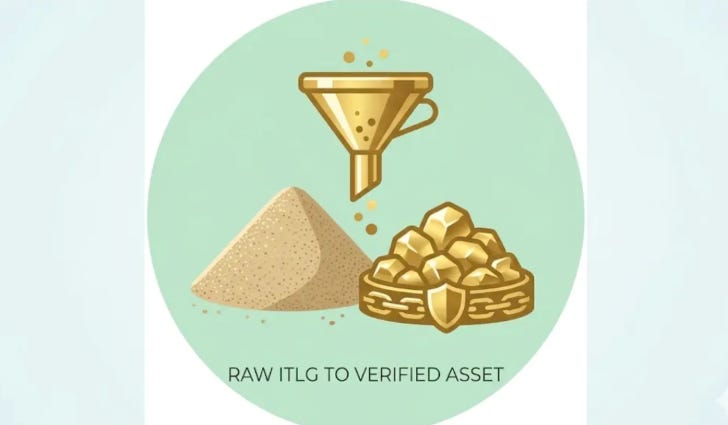
Staking ITLG does not mean locking your tokens away. The ITLG remains inside the owner’s wallet at all times.
Staking grants additional rights and allocation benefits for ITL ownership. Verified ITLG and regular ITLG are fundamentally the same token — the only difference is that ITLG gradually converts into verified ITLG on the mainnet through different phases.
The lock is not on your ITLG.
It is on the ITL you receive in return, released linearly as the network matures.
Understanding this changes how you think about your position entirely.
The Supply Structure and What It Creates
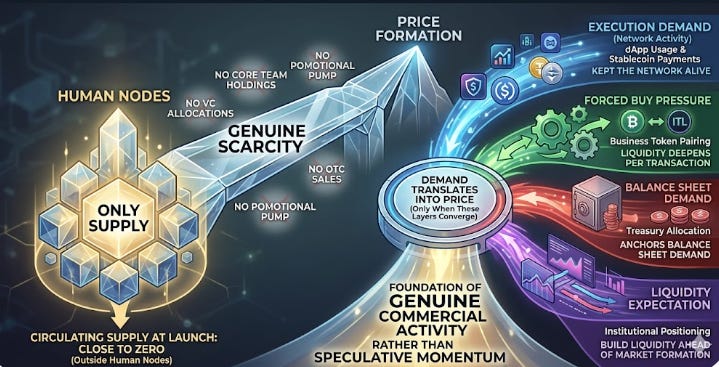
During the Private Mainnet phase, all ITLG and ITL mainnet tokens will only be owned by Human Nodes. The core team holds no mainnet tokens. No VC allocations. No OTC sales to treasury partners.
Circulating supply at launch will be close to zero outside of Human Nodes.
Against that near-zero supply, demand arrives from four directions simultaneously. But the four demand sources do not behave the same way.
Some generate activity. Others generate price.
dApp usage and stablecoin payments create execution demand — they keep the network alive. Business Token pairing introduces forced buy pressure — liquidity must be deepened with every transaction. Treasury allocation anchors balance sheet demand. Institutional positioning builds liquidity expectation ahead of market formation.
Only when these layers converge does demand translate into price.
The scarcity is not promotional. The core team holds no tokens to pump. The structure exists to ensure that when price forms, it forms on a foundation of genuine commercial activity rather than speculative momentum.
Validator: The Role Just Got Larger
KV’s recent statement confirmed something that had not been officially stated before.
During the Private Mainnet phase, the KYC verification process will become significantly faster as Validators begin participating.
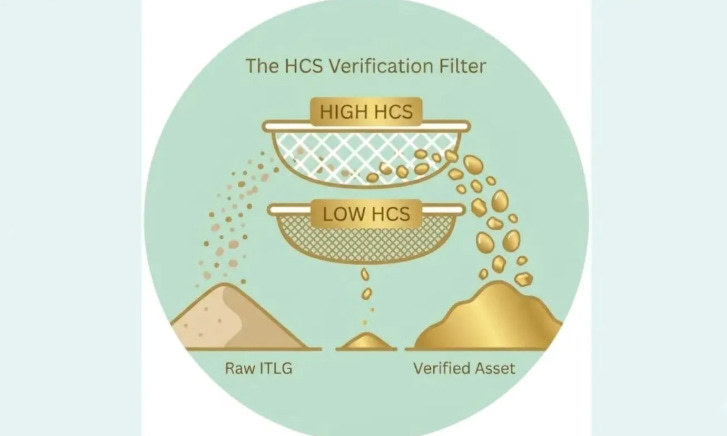
Verification priority is based on ACS and HCS scores.
This means Validators are not simply block producers. They are active participants in the identity infrastructure that every transaction depends on.
Layer 0’s ZK-Biometric identity gate — which every transaction must clear before executing at Layer 1 — will now be accelerated by the same operators who produce blocks.
The participants who spent the mining phase building HCS and ACS scores were not just accumulating tokens. They were building the credentials that determine access to the network’s most consequential role.
Nodes are no longer measured by computation.
Trust is performance.
Block production, KYC acceleration, and network security converge in a single position.
The Stablecoin Bridge and the Path to Mass Adoption
One structural question had remained open until now: how does ITL reach consumers who are not blockchain users.
The answer is staged.
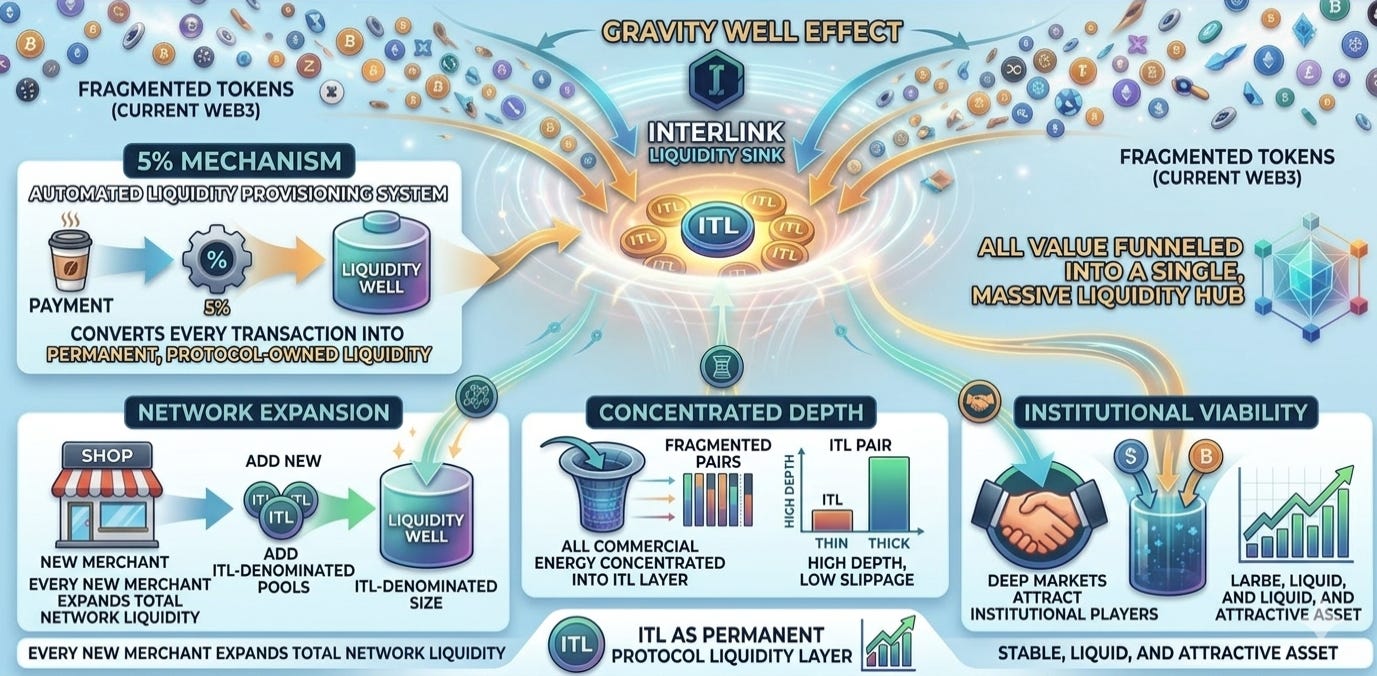
InterLink is building infrastructure for stablecoin payments first, with ITL token payㅁments for flights, hotels, SIM cards, and more as the intended destination.
Stablecoin infrastructure recruits merchants and consumers who never mined anything and never will. When a consumer pays with a stablecoin at an InterLink-connected point of sale, they are using infrastructure that will eventually settle in ITL.
The 10,000+ payment points targeted are not ITL payment points from day one. They are the network that ITL will grow into.
What Private Mainnet Actually Is
InterLink is a legal company in the United States. The Foundation is legally registered in Hong Kong. Google has made a lead investment, verifiable on Crunchbase.
InterLink was among the first blockchain companies invited for an interview at the NYSE. The ZK-Biometric identity technology ranks in the top 51 AI models globally according to NIST standards.
This is not a project preparing to test.
This is a project preparing to operate.
The Private Mainnet is where token economics meet real infrastructure for the first time. Where Validators begin accelerating identity verification. Where Business Tokens start pairing with ITL in live AMM pools. Where treasury partners begin accumulating a supply that is structurally constrained to near-zero outside of Human Nodes.
The DAO vote set the terms under which all of this unfolds.
This was not a vote on returns. It was a vote on whether returns can exist.
If you’d like to support my research, you may use my Interlink invitation code below. It also unlocks an instant mining boost ✚︎ Welcome Bonus for new users.
InterLink Referral Code: 905079415
Wallet Invitation Code : HSVZZPEJ (75% Commission Rebate)
❓ How to Join InterLink
The InterLink Sign-up Guide: Secure Your Digital Assets in 5 Minutes

The world moves in complex ways, but growing your assets doesn’t have to.
You don’t need capital. You just need five minutes.
📚 Done.T’s Related Insights
Why You Don't Need to Be a Crypto Expert to Participate in Tokenization

We are moving toward a world where real economic activity runs on blockchain infrastructure.
After the Airdrop: InterLink's Real Promotional Challenge Begins Now

For the past year, InterLink’s growth strategy was structurally simple.
🔎 Search “Done.T Insight” on Google for real data & analysis.
Disclosure: This post contains referral links and reflects my personal research and experience. It is provided for informational purposes only and does not constitute financial advice.