

When the InterLink Foundation announced LinkersMap as the first dApp incubated and invested in within the InterLink ecosystem, the headline read like a product launch.
It is not.
A Foundation that has spent fifteen months building verified identity infrastructure, deterministic settlement, and protocol-embedded liquidity mechanics does not choose its first public-facing application casually.
The choice of what to build first is itself a structural argument — about what the ecosystem needs, in what order, and why.
LinkersMap is that argument made visible.
What the First dApp Actually Proves
LinkersMap is a global marketplace. Users buy and sell products from anywhere in the world using InterLink Token as the payment method. The platform also surfaces nearby Payment Points that accept ITL, connecting on-chain settlement to physical commerce in real time.
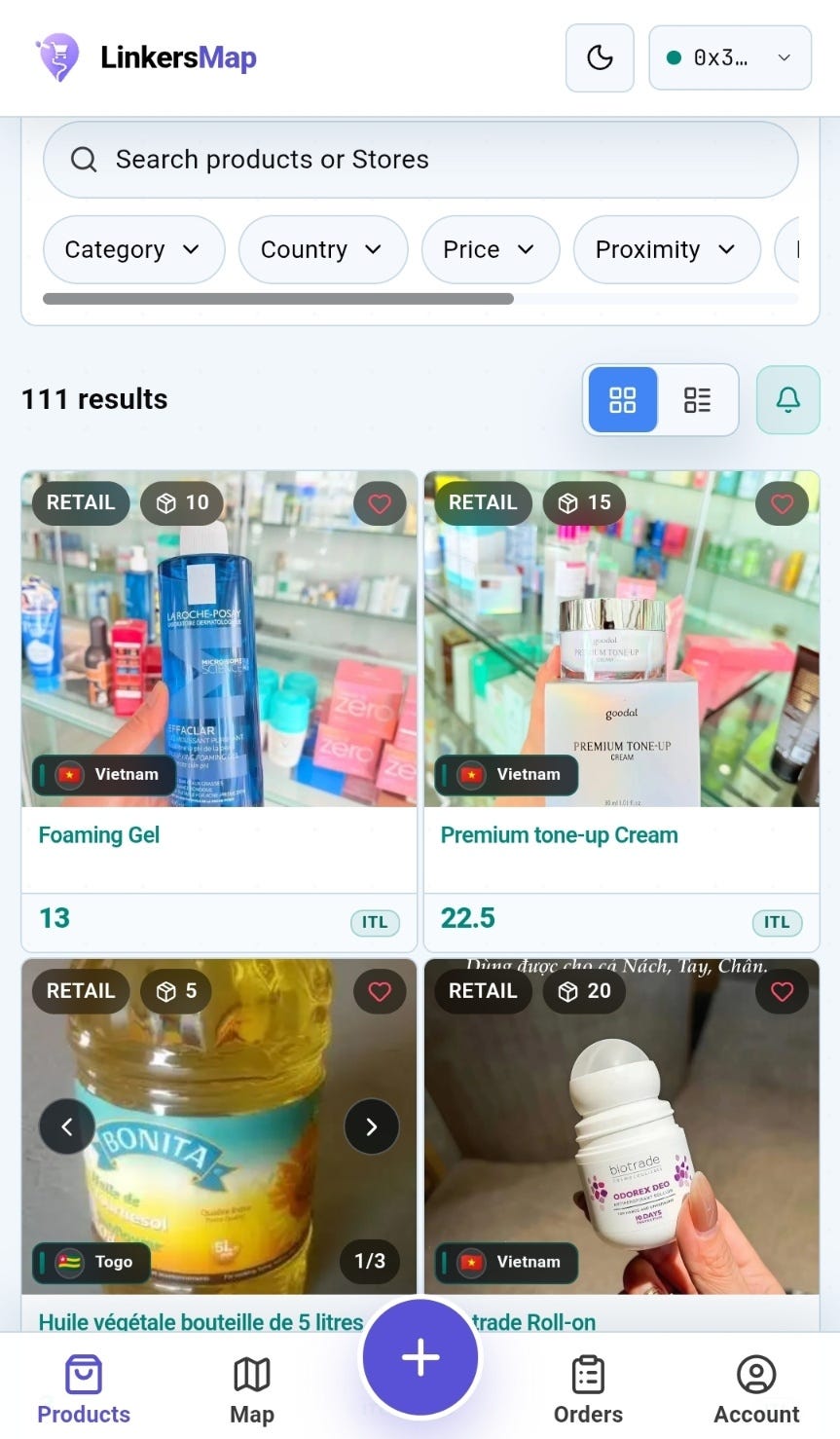
At the surface level, this is a useful application. At the structural level, it is something more specific: the first interface through which ITL gets spent on real goods and services by real people.
This matters more than it sounds.
A token without a spending surface is a speculative instrument. The moment ITL moves through a marketplace transaction — product listed, payment submitted, settlement confirmed on-chain — it begins behaving as a currency rather than an asset.
That behavioral shift cannot be manufactured by tokenomics design alone. It requires a place where the spending actually happens.
LinkersMap is that place. The first one.
Why a Marketplace. Why First.
The question worth asking is not what LinkersMap does. It is why the Foundation chose this category, at this moment, as the first application to incubate and back.
Every layer of InterLink’s architecture exists for a single purpose: turning real-world transactions into on-chain economic activity.
Identity verified before execution. Settlement in three to five seconds. Transaction revenue routed automatically into protocol liquidity. A commerce interface businesses can integrate without needing to understand the underlying cryptography.
This is payment infrastructure. Not a DeFi protocol. Not a gaming chain. A system designed from the ground up to move real money between real people for real goods and services.
A marketplace is the most direct proof that this infrastructure works as intended.
A game proves the chain can run logic.
A DeFi protocol proves the chain can move assets.
A marketplace proves the chain can power commerce.
Commerce is what the infrastructure was built for.
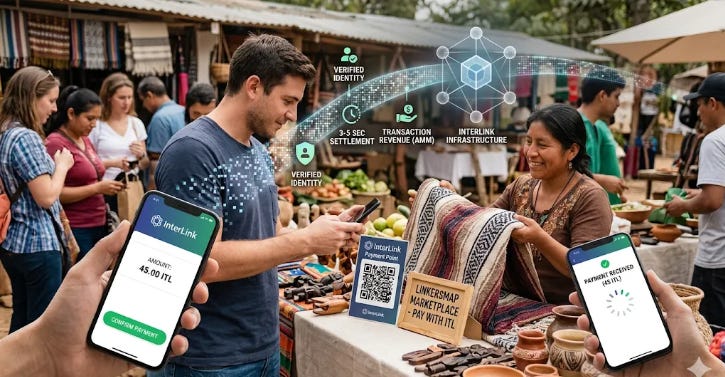
No single other dApp category produces that complete demonstration as cleanly — identity, settlement, value capture, and commerce interface, all operating end to end in a single transaction.
The Payment Points Connection
LinkersMap does something the Visa Card and ITLX Mobile Top-Up did not: it surfaces the Payment Points network as a navigable, searchable layer within a commerce interface.
This is not a minor feature. Payment Points are the physical anchor of InterLink’s real-world economy — the locations where ITL becomes spendable in everyday life.
Until LinkersMap, those points existed as a registry. LinkersMap converts that registry into a discovery interface, making it possible for users to find, evaluate, and transact with ITL-accepting merchants as part of a familiar shopping experience.
The structural implication is direct.
A payment network’s value scales with the density and discoverability of its acceptance points. As merchant registrations grow ahead of the Private Mainnet, every new listing on LinkersMap is simultaneously an addition to the Payment Points map.
More merchants on LinkersMap means more Payment Points. More Payment Points means more reasons to hold and spend ITL. More ITL in circulation means more transaction volume routing through the protocol’s AMM mechanics.
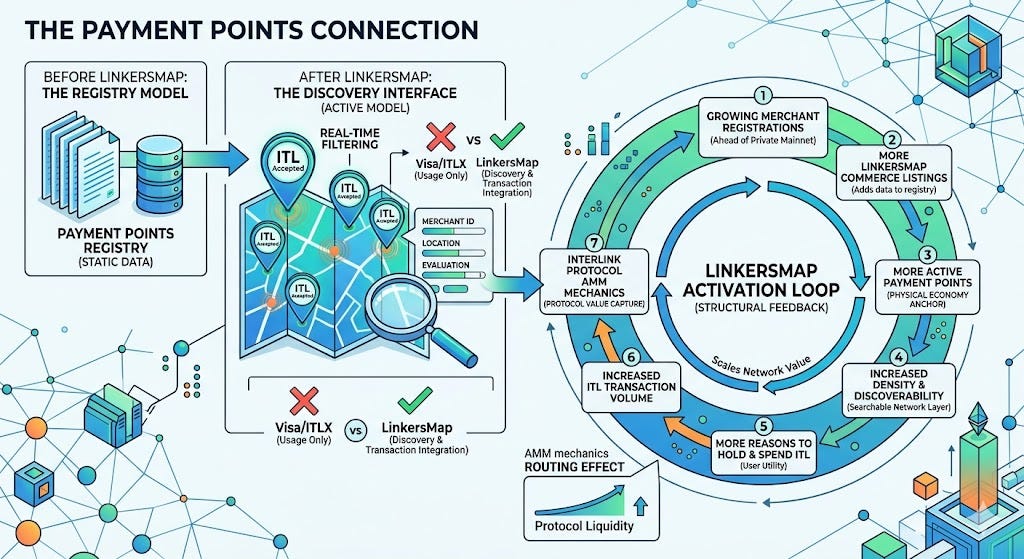
The loop is not theoretical. LinkersMap activates it.
The Grants Signal
The Foundation’s decision to incubate and invest in LinkersMap carries a second structural implication that most readers will miss.
LinkersMap is not just the first grant recipient. It is the template.
The program at interlink.foundation/grants exists to fund builders who want to create dApps on InterLink Chain. What LinkersMap demonstrates is what the Foundation is looking for: not raw technical sophistication, but applications that deepen real-world commerce on InterLink infrastructure.
A credentialed developer. A category with universal relevance. A product that makes the Payment Points network more valuable simply by existing.
Every dApp the Grants Program funds from here will be evaluated against that same logic.
Does it create a new surface for ITL to be spent?
Does it deepen the payment network?
Does it connect on-chain settlement to real-world behavior?
LinkersMap answered all three. That is why it was first.
Position Lock
The InterLink Foundation did not choose its first dApp to demonstrate technical capability. BitFlip already did that.
It chose a marketplace because a marketplace is the category that most directly answers the question every observer of this ecosystem is eventually forced to ask:
where does ITL actually get spent?
That question now has an answer.
And the Foundation chose to answer it before the Mainnet — not after — because the economy that activates in June needs to be already running, not starting from zero.
Mainnet does not create an economy.
It activates one.
LinkersMap is evidence that the economy is already forming.
If you’d like to support my research, you may use my Interlink invitation code below. It also unlocks an instant mining boost ✚︎ Welcome Bonus for new users.
InterLink Referral Code: 905079415
Wallet Invitation Code : HSVZZPEJ (75% Commission Rebate)
❓ New to InterLink?
For a 🔗step-by-step guide, start with the pinned post at the top of my blog — Done.T Insight✨.
You don’t need capital. You just need five minutes.
📚 Done.T’s Related Insights
Zero-Capital Tokenization: How InterLink Creates Value Without Investment

Tokenization is one of those words that sounds important but rarely gets explained.
InterLink Update V5.0.3: The System Is Adapting. So Should You.

Most update announcements get read as a checklist. New Curators. Snapshot live. Recovery upgraded. Note it, move on.
🔎 Search “Done.T Insight” on Google for real data & analysis.
Disclosure: This post contains referral links and reflects my personal research and experience. It is provided for informational purposes only and does not constitute financial advice.