

In our previous analysis, we established the fundamental mechanics of Digital Equity:
Payments generate buy pressure, revenue connects to asset value, and real-world commerce — rather than speculative narrative — becomes the primary engine of token demand.
🔗 [Part 1: When Payments Become Buybacks]
The concept is elegant in its simplicity.
Yet, to truly grasp the scale of what is being built, we must look beneath the surface of individual business tokens.
InterLink’s architecture contains a Secondary Layer — a structural masterstroke that transforms ITL from a simple payment currency into the Monetary Anchor of a decentralized global economy.
⚖️ The Denominator of Value: Establishing a Universal Unit of Account
In any financial ecosystem, assets do not exist in isolation; they exist in relation to a Settlement Layer. A stock is priced in Dollars; a bond is settled in Euros. Assets do not exist without a unit of account.
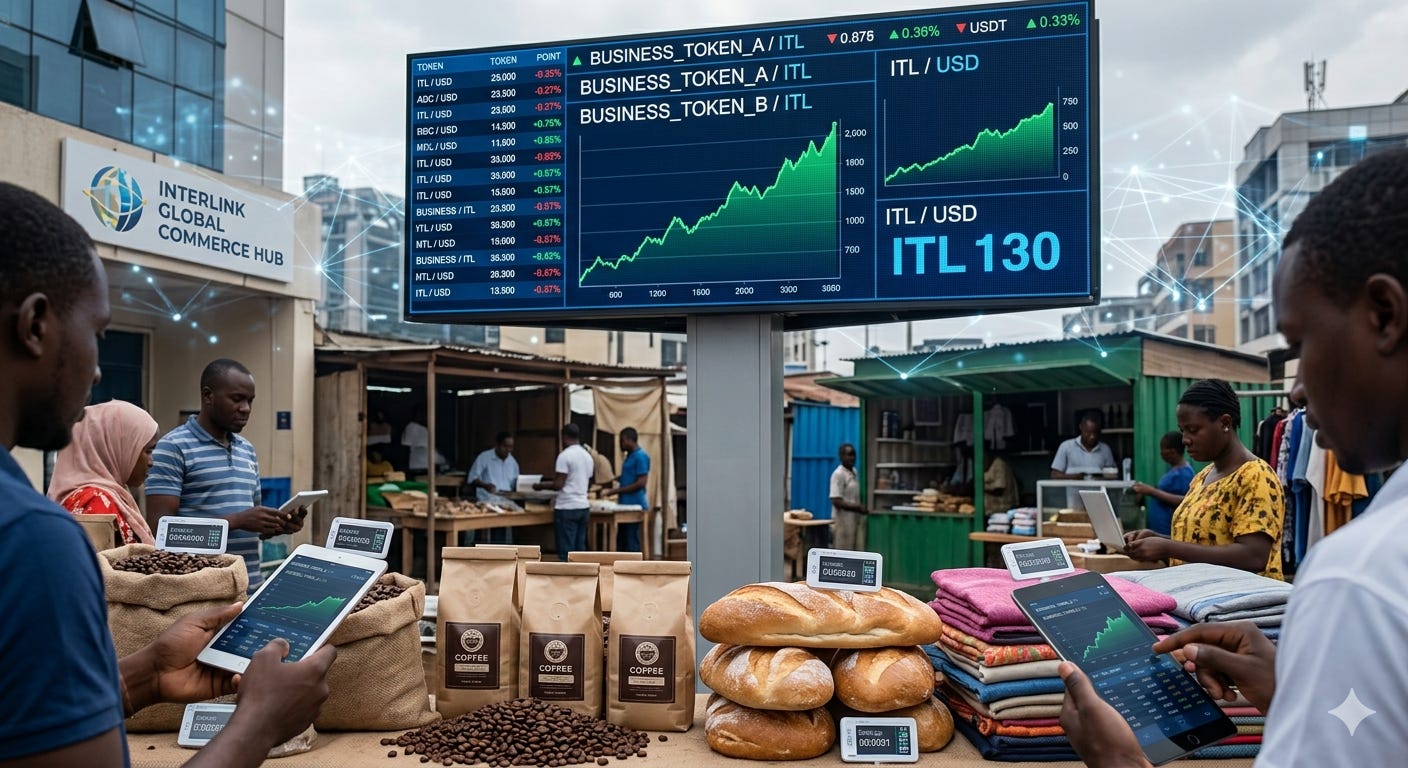
When a merchant tokenizes their business on InterLink, they aren’t just creating an isolated digital asset. They are entering a mandatory, protocol-level liquidity pair:
BusinessToken / ITL.
This pairing is the most critical architectural decision in the system.
By denominating every tokenized business in ITL, the protocol establishes a Universal Unit of Account.
In the legacy world, the US Dollar maintains its hegemony because global commodities — most notably oil — are priced and settled in Greenbacks.
InterLink applies this “Petrodollar” logic to the digital realm. As thousands of diverse businesses join the network, ITL becomes the yardstick by which all productivity is measured.
It is no longer just a “coin”; it is the pricing standard for a new class of productive assets.
💻 The OS Analogy: Capturing the Aggregate Beta of Productivity
There is a fundamental asymmetry between the “Application Layer” (Individual Business Tokens) and the “Settlement Layer” (ITL) that most observers miss.
Think of ITL as an Economic Operating System (OS). Individual business tokens are the “apps” running on top of it.
In any healthy, evolving economy, some apps will thrive, others will stabilize, and some will inevitably fail — this is the natural, healthy variance of entrepreneurship.
However, the OS beneath them does not share this individual risk.
ITL absorbs the Aggregate Productivity of the entire system.
Whether Business A is a booming success or Business B is undergoing a correction, the volume of their transactions — the very heartbeat of their commercial life — requires ITL.
The 5% buyback mechanism ensures that every transaction, regardless of its source, strengthens the liquidity and price floor of the settlement layer.
“Speculators chase individual ‘apps’ for alpha, but the architect owns the OS to capture the beta of an entire civilization’s productivity.”
🧲 Solving the Liquidity Fragmentation: The “Gravity Well” Effect
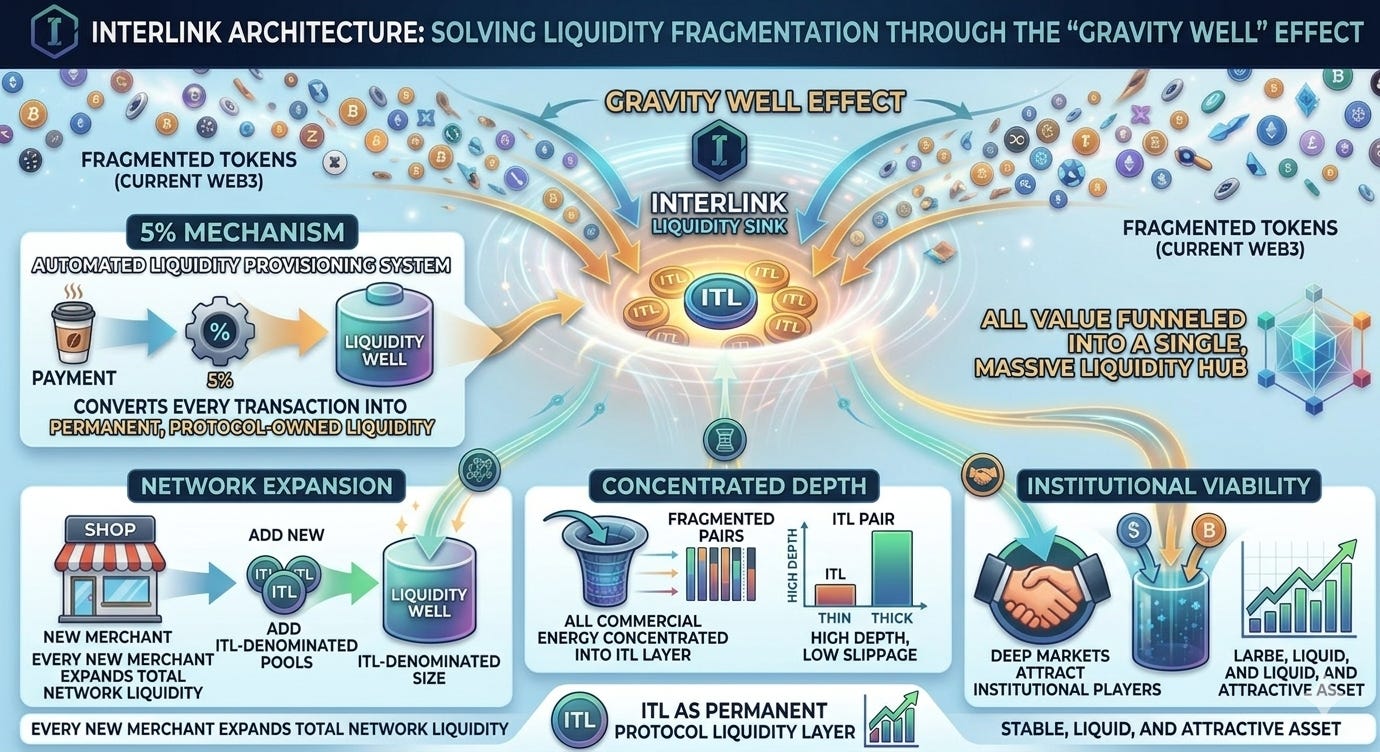
One of the greatest failures of the current Web3 landscape is Liquidity Fragmentation. Thousands of tokens are scattered across disconnected pools, leading to high slippage, fragility, and capital inefficiency.
InterLink’s architecture solves this by creating a Liquidity Sink. Because every business is paired with ITL, all value is funneled into a single, massive liquidity hub.
This creates a powerful “Gravity Well” effect:
Network Expansion: Every new merchant adds a new ITL-denominated pool, expanding the total liquidity of the network.
Concentrated Depth: Instead of spreading liquidity thin across thousands of random pairs, all commercial energy is concentrated into the ITL layer.
Institutional Viability: This concentrated depth makes ITL a more stable, liquid, and attractive asset for large-scale institutional players, who require deep markets to enter.
The 5% mechanism is more than a fee; it is an Automated Liquidity Provisioning system that works 24/7, converting every cup of coffee sold into permanent, protocol-owned liquidity.
🏛️ From Speculative Premium to Monetary Premium
Most crypto assets rely on a “Speculative Premium” — the fragile hope that a “greater fool” will buy the asset for a higher price later.
ITL, through the Revenue-Backed Protocol, begins to accumulate something far more durable: a “Monetary Premium.”
This premium is derived from Structural Necessity.
As the InterLink ecosystem grows, holding ITL is no longer a choice; it is a requirement for participating in the world’s most transparent and productive digital economy.
The 5% buyback cycle acts as a continuous “Supply-Side Squeeze.” It systematically pulls ITL from the open market and locks it into productive liquidity pools.
This isn’t driven by hype or tweets; it is driven by the relentless, daily rhythm of global commerce.
For the first time, a digital asset emerges whose value is a direct mathematical derivative of real-world work.
🤝 The Convergence of Payments and Capital
What KV’s architecture ultimately proposes is the Dissolution of the Wall between Payments and Capital Markets.
In the legacy world, these are two separate spheres: you pay for goods with “dead” cash, and you invest in “live” stocks.
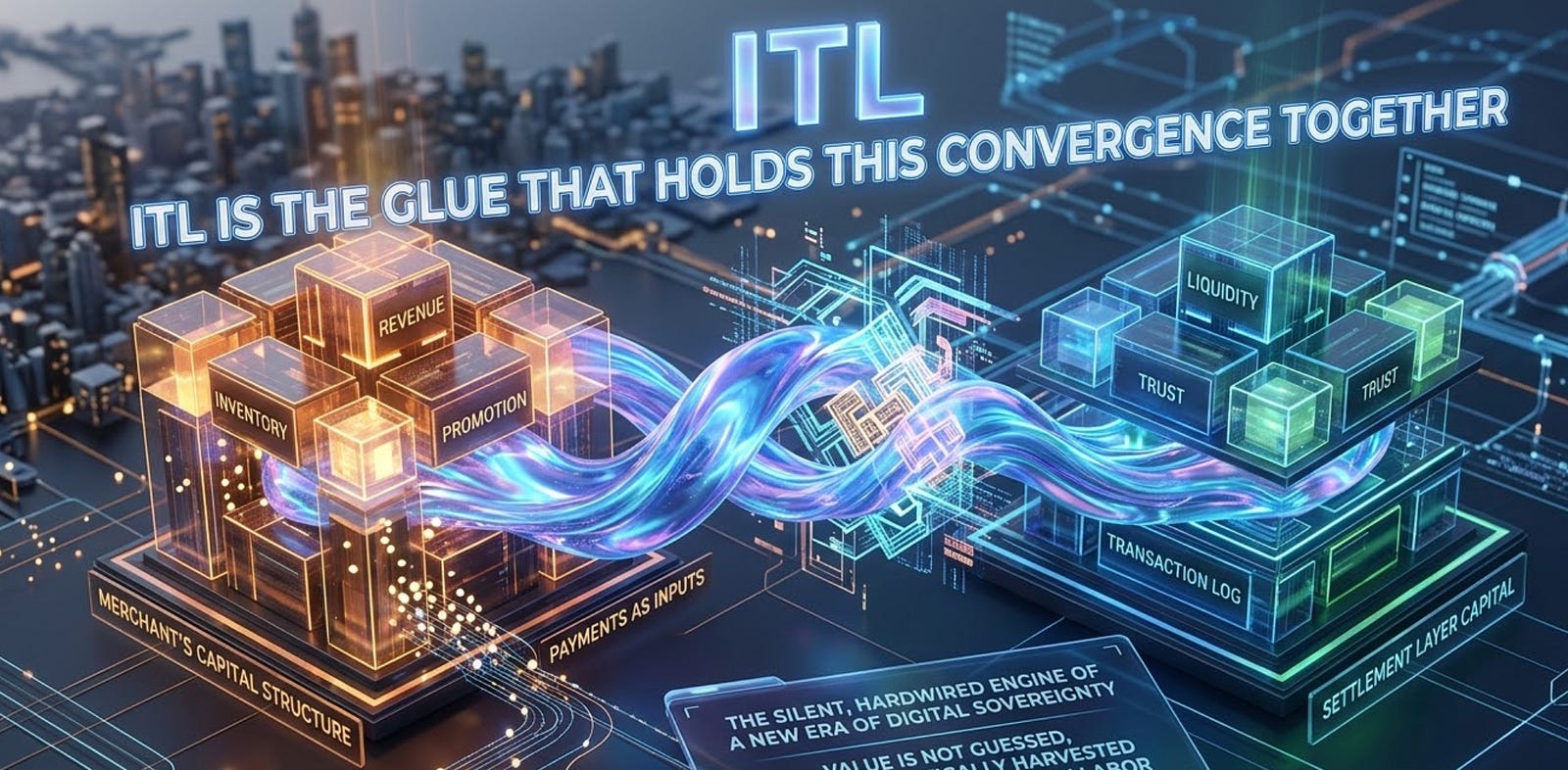
In the InterLink model, payments become inputs to the capital layer.
The act of buying a product is the act of strengthening the capital structure of both the merchant and the settlement layer.
ITL is the glue that holds this convergence together.
It is the silent, hardwired engine of a new era of digital sovereignty — one where value is not guessed, but mathematically harvested from the fruits of human labor.
🔜 In the Final Part
The settlement layer does not require every token to be a “unicorn”; it only requires the ecosystem to breathe.
In Part 3, we will explore the “New Capital Market” — how InterLink’s design creates a more honest, data-driven, and productive financial future than the speculative world we leave behind.
Source:


If you’d like to support my research, you may use my Interlink invitation code below. It also unlocks an instant mining boost ✚︎ Welcome Bonus for new users.
InterLink Referral Code: 905079415
Wallet Invitation Code : HSVZZPEJ (75% Commission Rebate)
❓ New to InterLink?
For a 🔗step-by-step guide, start with the pinned post at the top of my blog — Done.T Insight✨.
You don’t need capital. You just need five minutes.
📚 Done.T’s Related Insights
Zero-Capital Tokenization: How InterLink Creates Value Without Investment

Tokenization is one of those words that sounds important but rarely gets explained.
Why You Don't Need to Be a Crypto Expert to Participate in Tokenization

We are moving toward a world where real economic activity runs on blockchain infrastructure.
🔎 Search “Done.T Insight” on Google for real data & analysis.
Disclosure: This post contains referral links and reflects my personal research and experience. It is provided for informational purposes only and does not constitute financial advice.