

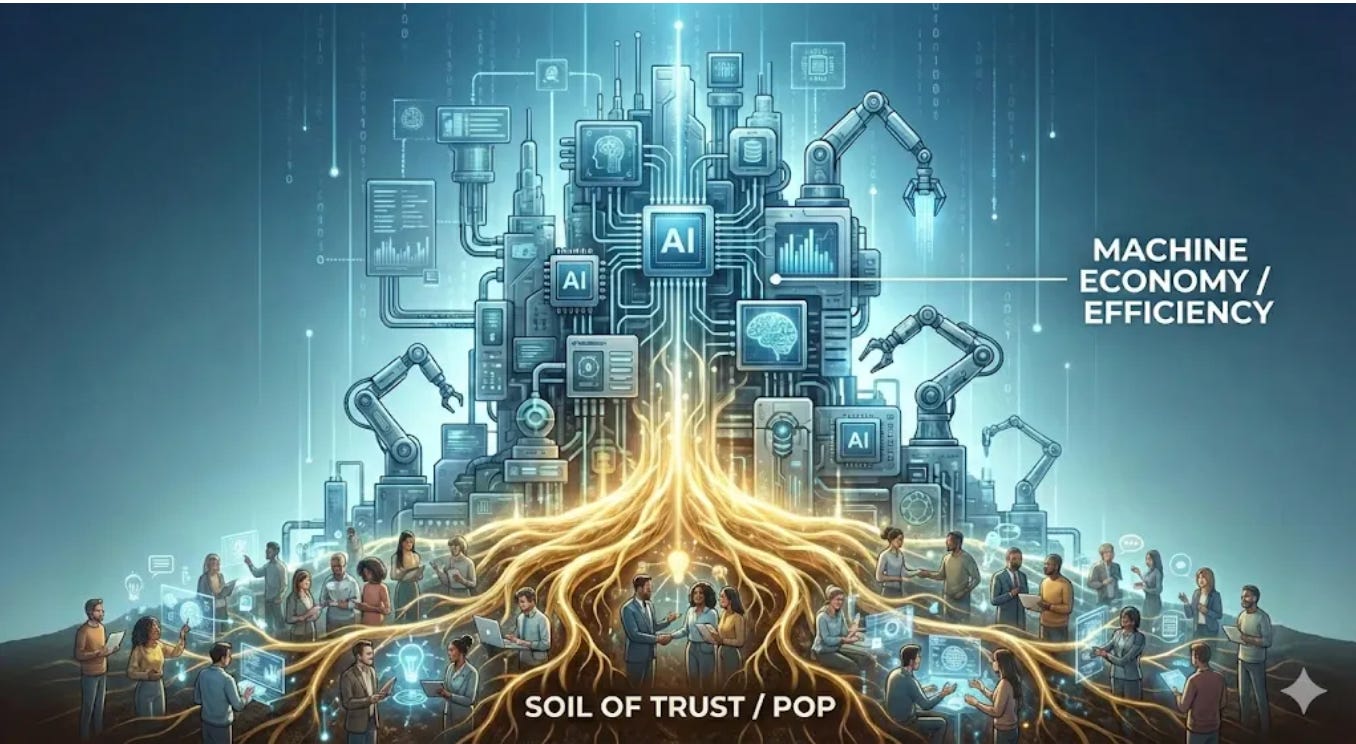
In a three-axis economy, capability is abundant. Only human presence is scarce.
That is not a philosophical observation. It is a structural fact with direct economic consequences.
When autonomous systems can out-produce, out-compute, and out-execute human effort at a fraction of the cost, the basis of human economic participation cannot remain capability. Something else must take its place.
The answer is not a new productivity metric. It is a different category of value entirely: the verified fact of being human.
In a world saturated with autonomous bots and AI agents capable of mimicking human behavior at scale, proof that a real, continuous human presence exists behind a connection becomes genuinely scarce.
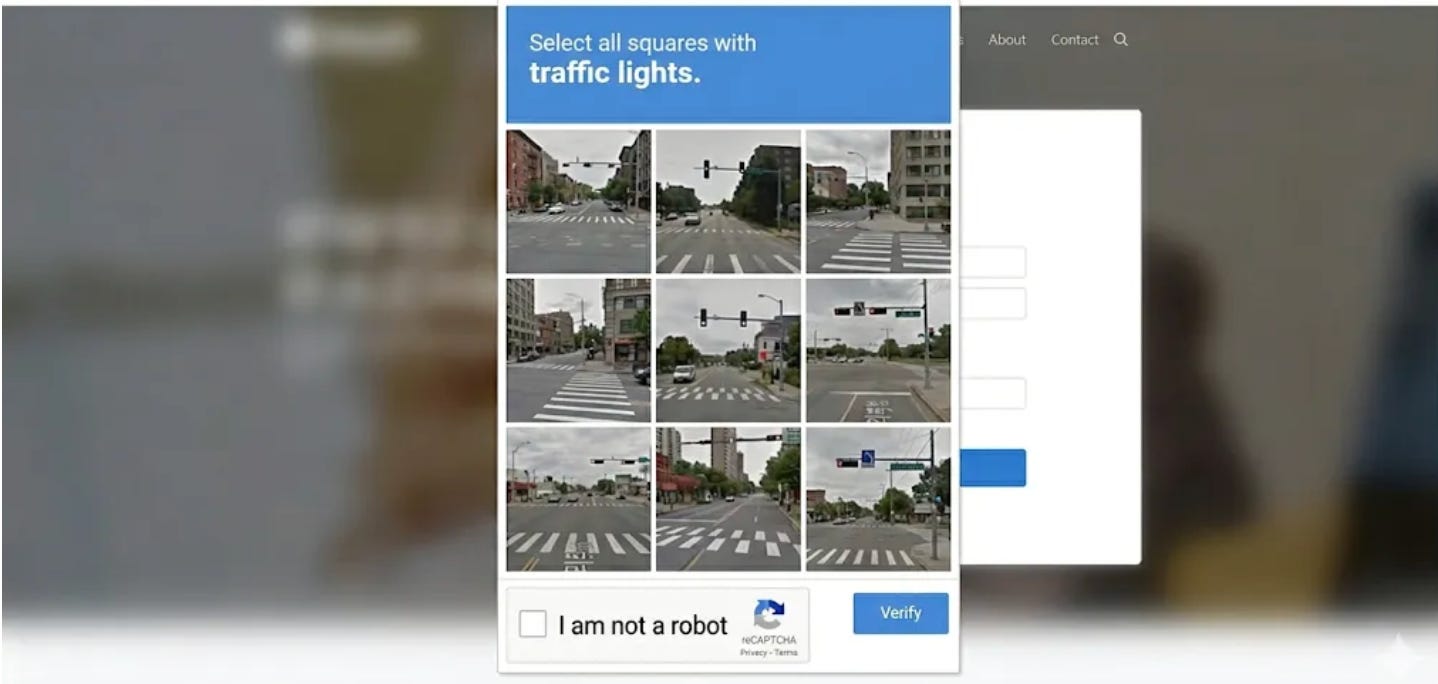
It is the one asset that cannot be replicated by an algorithm, purchased with compute power, or manufactured at scale. Machines have mastered the art of production. They have not mastered — and cannot master — the art of being.
This is the structural logic behind Proof of Personhood (POP). And it is the foundation of human sovereignty in the machine age — not just a new economic model, but the architecture that determines whether humans retain a position within the system at all.
The Qualification Layer
InterLink’s dual-token system — $ITLG and $ITL — separates two functions that legacy financial infrastructure collapses into one: the qualification layer and the utility layer.
$ITLG is the qualification instrument.
It is not earned through computational power or capital accumulation. It is earned through sustained, verified human participation — measured by the Human Credit System (HCS), a behavior-based scoring system that evaluates mining consistency, Security Group activity, and on-chain participation over time.
The critical distinction is this: machines can purchase compute power, but they cannot purchase accumulated time. HCS does not ask whether you are human once. It asks how consistently you have been present.
A bot can simulate a human interaction.
It cannot simulate a human history.
The result is that $ITLG becomes the crystallization of something machines cannot counterfeit — continuous, verifiable human presence converted into a governance-bearing asset. Whoever holds $ITLG holds the qualification to participate in the layer of the economy where human judgment governs access and legitimacy.
This is why POP is not optional. It is the entry condition.
The Translation Layer
$ITL operates on different logic. If $ITLG is equity earned through qualification, $ITL is the dividend produced through translation — the conversion of machine-generated value into human-usable outcomes.
Machines produce value at scale, but they do not consume reality. An AI does not buy groceries. A robot does not pay rent.
As machines replace human labor at scale, the source of value shifts — but the question of who should receive that value does not disappear.
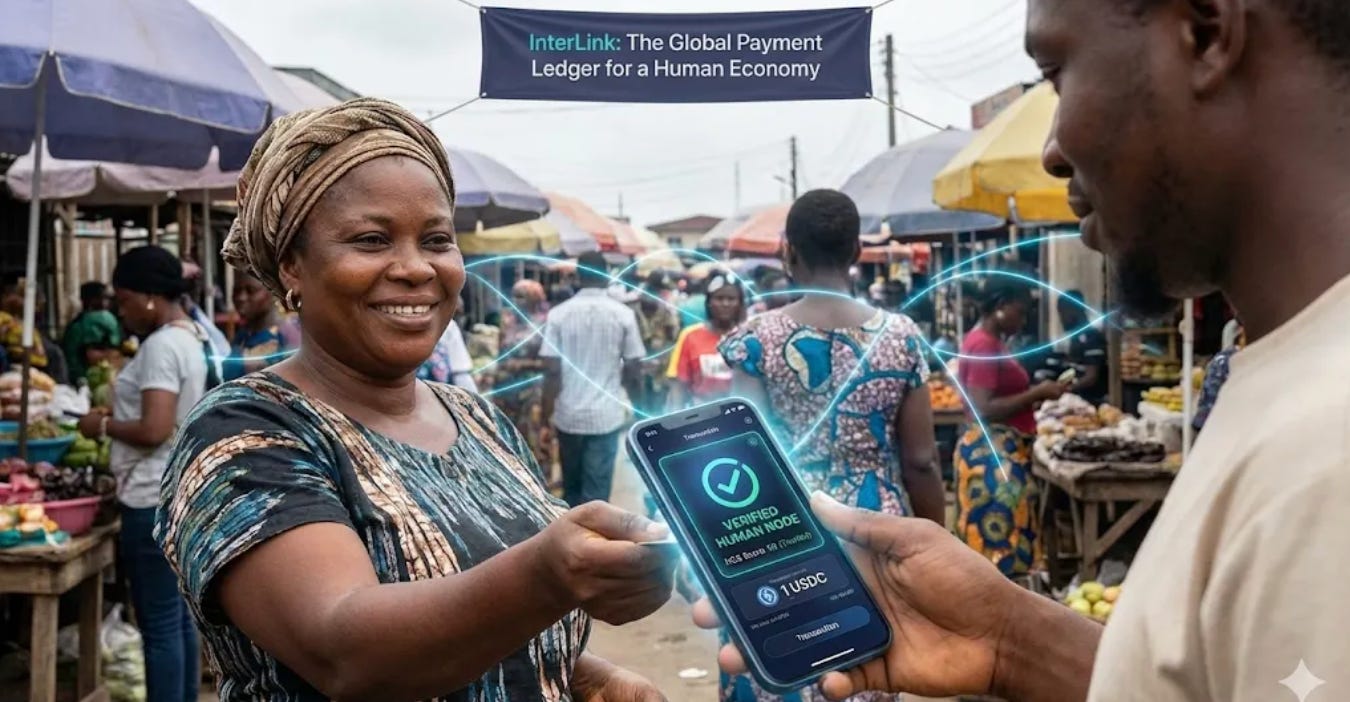
$ITL is the interface layer — connected to Visa-linked payment rails — that converts machine-generated economic surplus into real-world purchasing power, accessible instantly across global merchant networks.
By separating qualification from utility, InterLink ensures that the governance layer remains anchored to verified human participation while the utility layer remains fluid enough to operate at machine speed.
The two tokens are not competing instruments. They are sequential ones — qualification first, then translation.
Machines produce value.
Humans qualify it.
The Dividend, Not the Handout
This is where InterLink’s model diverges sharply from traditional Universal Basic Income.
Classical UBI redistributes tax revenue — a mechanism that inherits all the structural fragility of government fiscal systems: funding sustainability, identity verification, the unresolved tension between income and contribution. Morally appealing. Structurally fragile.
InterLink operates on entirely different logic. Transaction fees generated by large-scale machine activity flow back to verified human participants — not as welfare, but as participation-based returns weighted by trust score.
In this model, value is not redistributed after the fact — it is generated at the point of transaction.
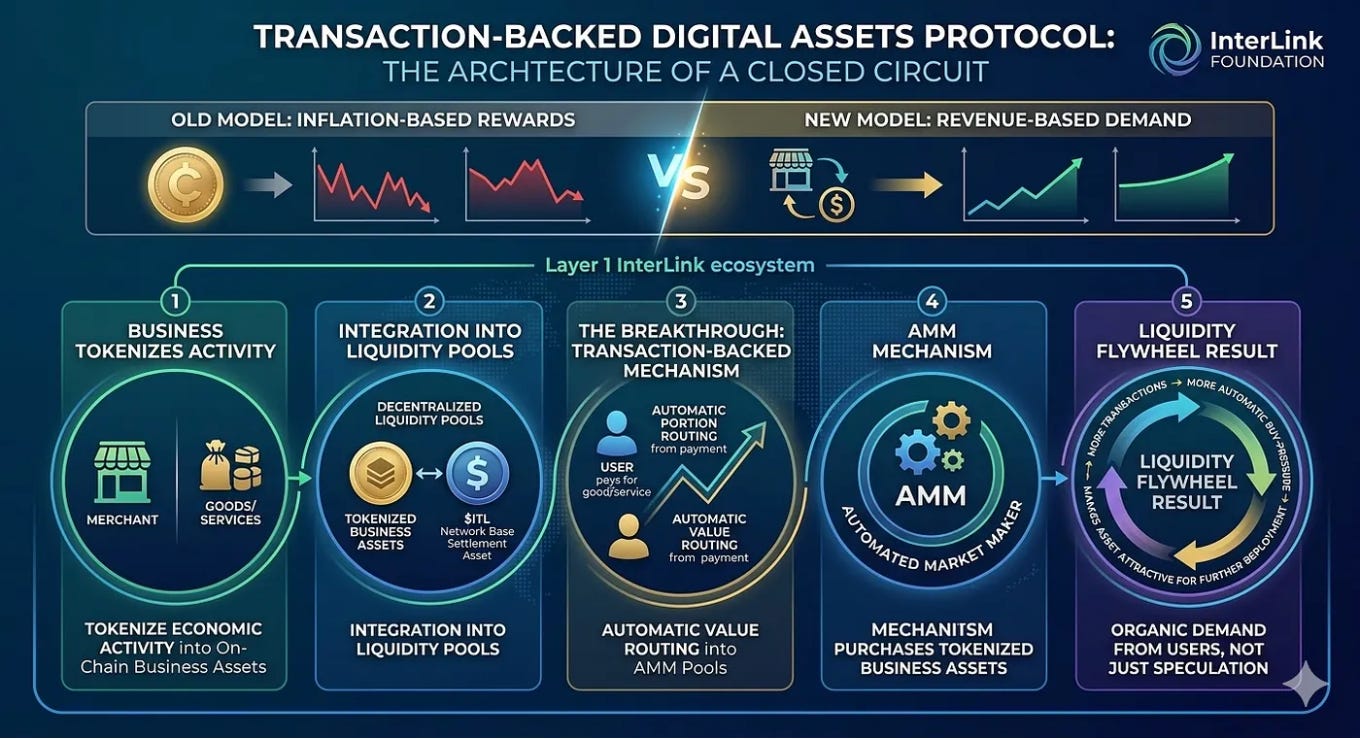
The Human Credit System determines not just who qualifies, but how much. High trust score produces higher $ITL income.
The income is not a grant. It is a dividend, generated continuously by network machine activity and distributed according to the depth and consistency of verified human participation.
What emerges dissolves a boundary that legacy financial systems have always maintained: the line between income recipient and asset owner.
A verified human node holds network equity in $ITLG while simultaneously receiving income in $ITL. Two roles that have historically been separate, now unified within a single participation structure.
This is not redistribution.
It is protocol-level distribution.
The Sovereign Position
InterLink does not propose that humans compete with machines. It proposes that humans qualify above them.
Machines generate the scale.
AI optimizes the flow.
Humans define the legitimacy.

And the system is engineered so that the surplus produced by machine activity flows — structurally and mathematically — back to those who provide the one thing the machine economy cannot manufacture on its own: the verified human anchor at its foundation.
Sovereignty, in this context, does not mean control over machines. It means retaining the right to be the final qualifier of value in a system that machines power but cannot own.
In the era of autonomous production, prosperity will not belong to those who work faster. It will belong to those who qualify longer.
If you’d like to support my research, you may use my Interlink invitation code below. It also unlocks an instant mining boost ✚︎ Welcome Bonus for new users.
InterLink Referral Code: 905079415
Wallet Invitation Code : HSVZZPEJ (75% Commission Rebate)
❓ New to InterLink?
For a 🔗step-by-step guide, start with the pinned post at the top of my blog — Done.T Insight✨.
You don’t need capital. You just need five minutes.
📚 Done.T’s Related Insights
Why Proof of Personhood Makes You a Validator — No Hardware Required

For more than a decade, participating in blockchain validation meant clearing one of two very high bars.

🔎 Search “Done.T Insight” on Google for real data & analysis.
Disclosure: This post contains referral links and reflects my personal research and experience. It is provided for informational purposes only and does not constitute financial advice.